Colourful Streets in Copenhagen: A Photographer’s Guide
A photographer’s take on colourful streets in Copenhagen, including the famous spots you’ll probably recognise and a few you might not. Spoiler alert: Copenhagen has a lot more colourful streets than just Nyhavn!
Table of ContentsShow
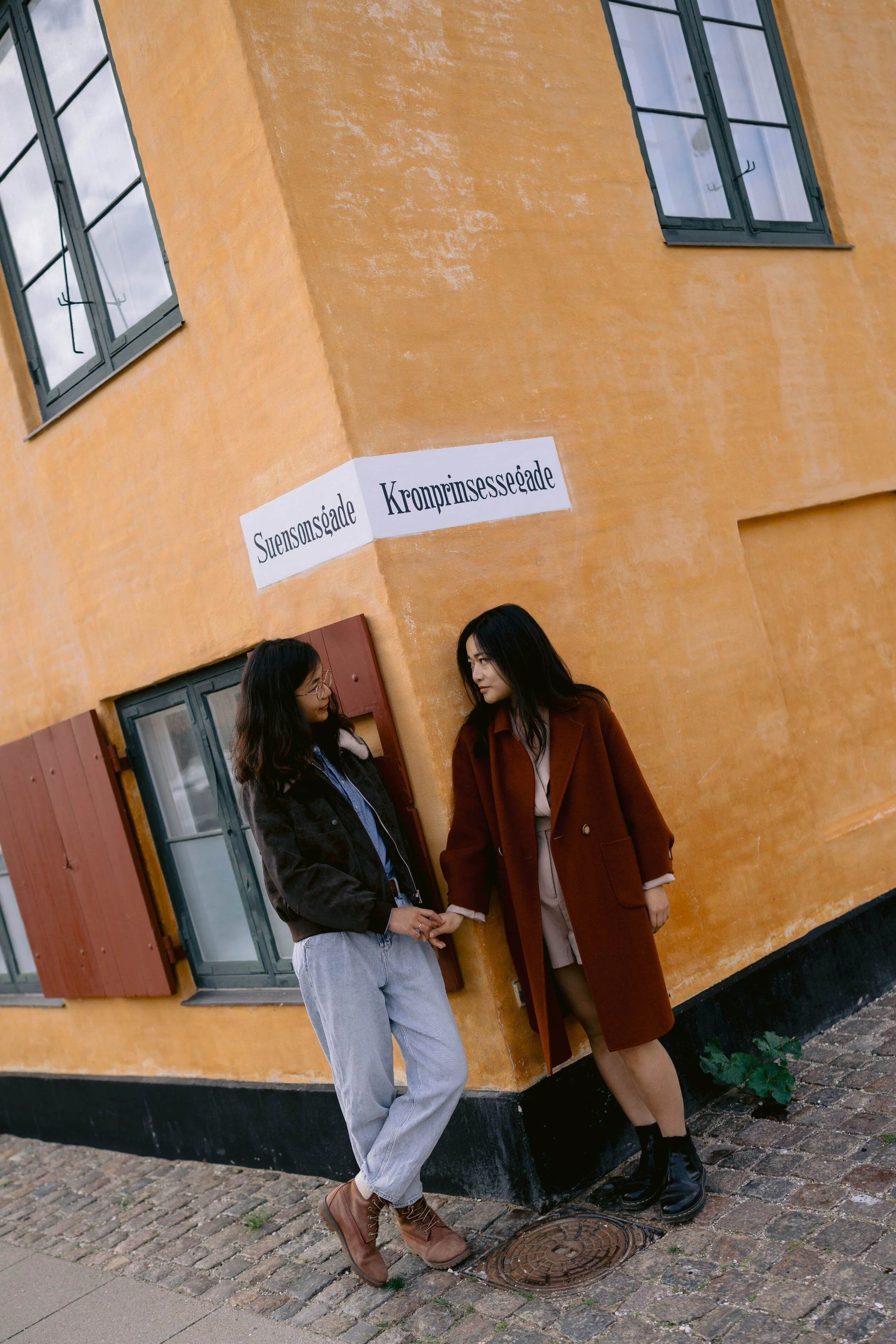
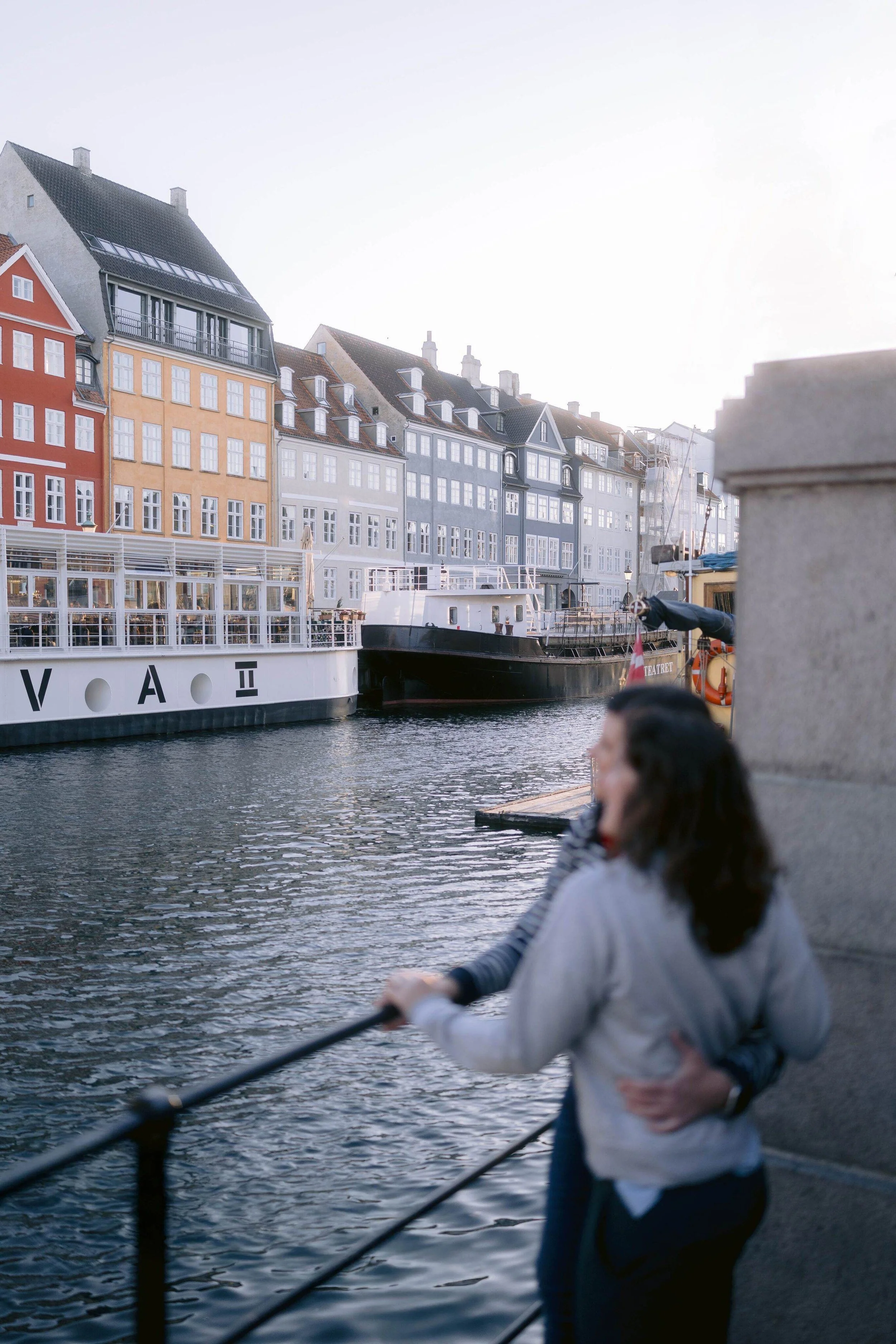
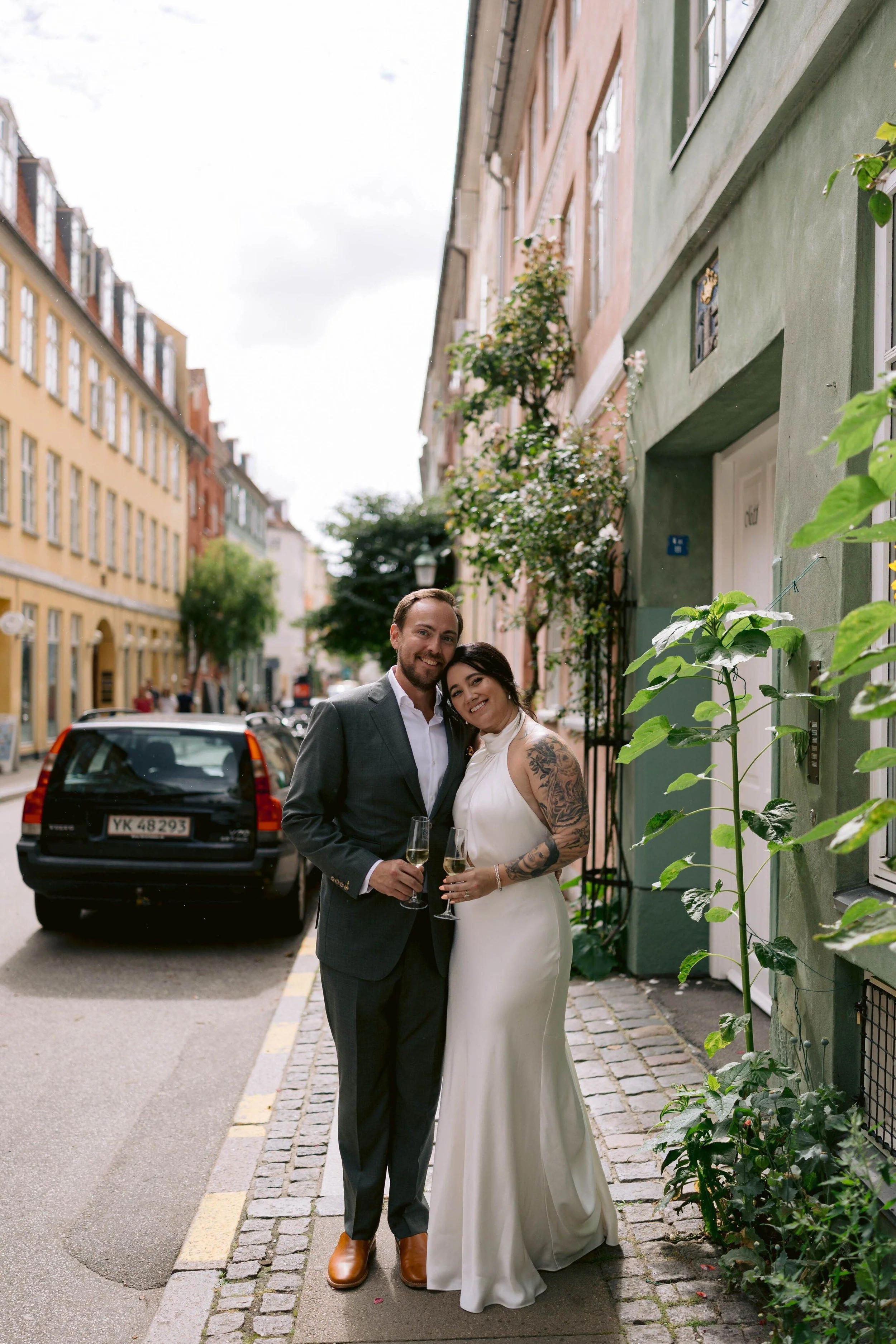
Copenhagen’s Most Colourful sTREETS
Copenhagen is known for its colourful buildings, and you don’t have to look far to find them. Some streets are well known, while others are quieter residential areas that you might come across while exploring the city.
This is my personal take on some of the colourful streets and areas I enjoy photographing around Copenhagen. I’m looking at them from a photographer’s perspective, but also as someone who knows the city and spends a lot of time walking its streets. Things like the light, crowds, parked cars and time of day can make quite a difference, so I’ll share a few of my own observations along the way.
So, with that in mind, let’s take a look at my recommended list.
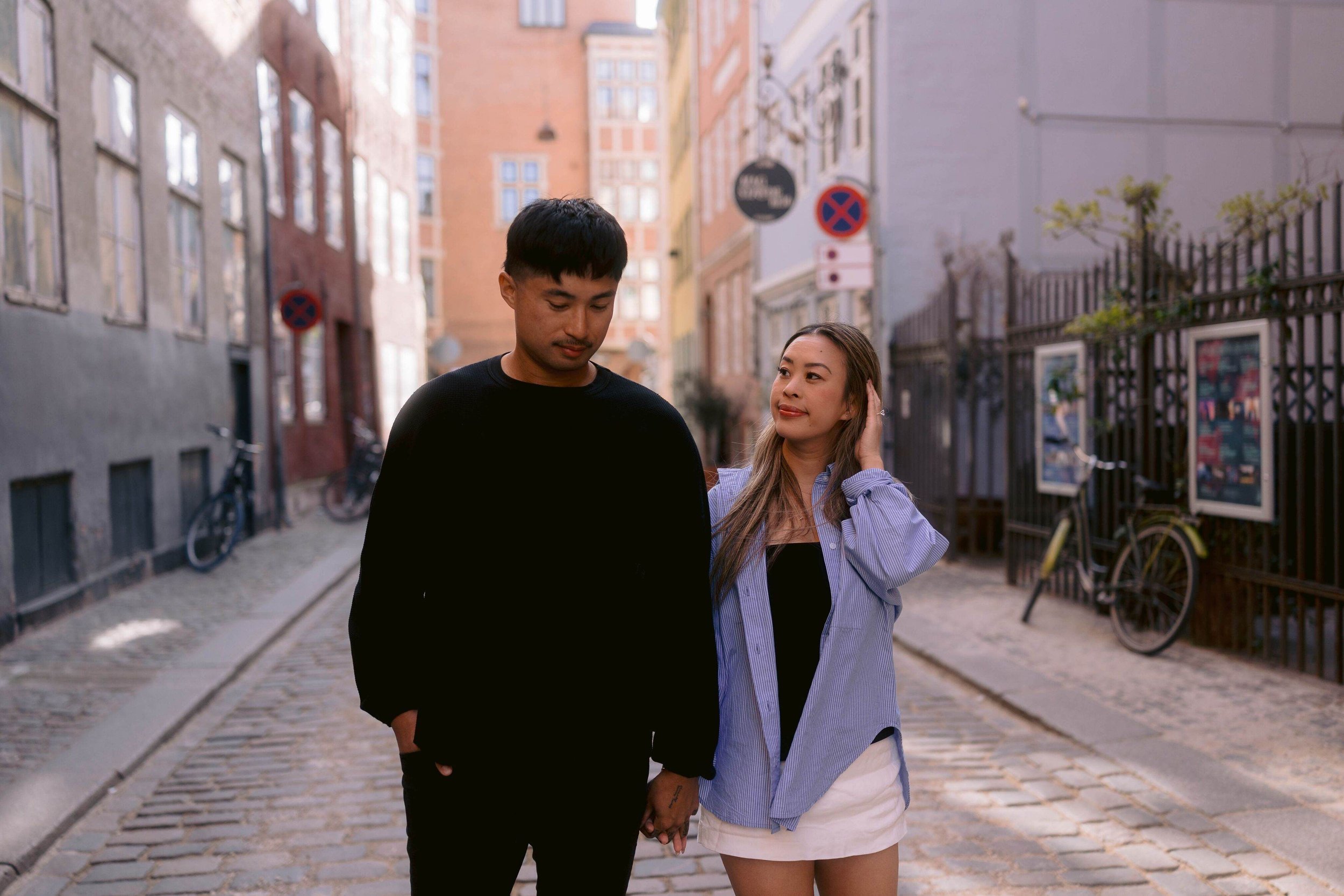
Magstræde
Magstræde is probably one of the first streets that comes up when people search for colourful or picturesque streets in Copenhagen. It is in the old city centre, close to City Hall and many of the main sights, and the narrow cobbled street with its old buildings is easy to recognise.
It is certainly worth walking down, but I wouldn’t necessarily put it at the top of my list for photography. It is very well known, so it can get busy with tourists, and I often find delivery trucks, parked vehicles or groups of people getting in the way of the view I want. Construction work has also been an issue here at various times. If you are already in the area, have a look, but I would not build an entire photo walk around Magstræde. There is plenty to explore in the surrounding streets, and sometimes moving just a little away from the obvious viewpoint gives you a much better result.
Nyboder and the streets around it
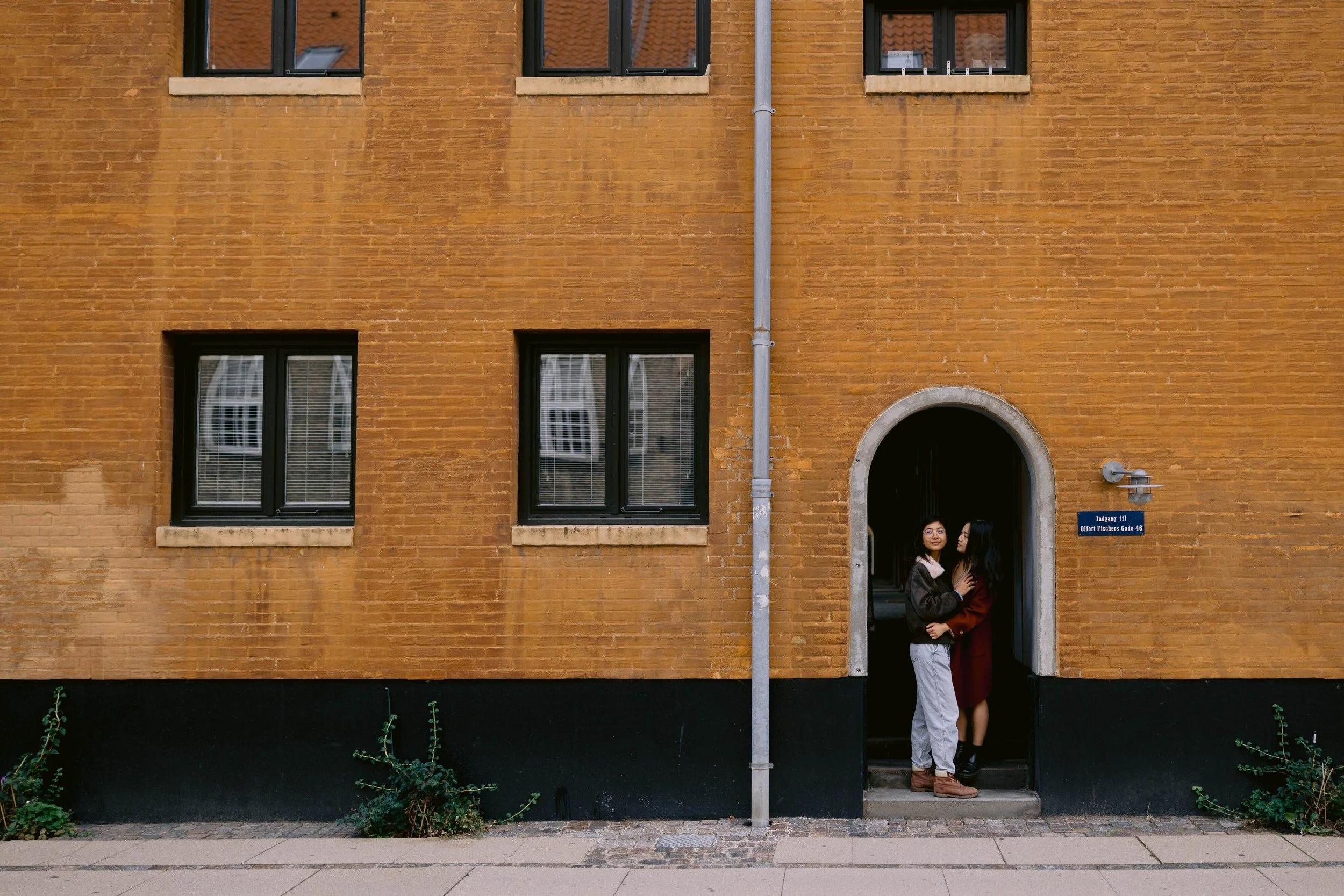
Nyboder is one of the more recognisable areas in Copenhagen when it comes to colourful buildings. The historic rows of houses are particularly known for their yellow colour and repetitive layout. The houses were commissioned by King Christian IV to provide accommodation for the Navy’s seafaring men and their families, and the area has survived for centuries. (Visit Copenhagen)
The yellow houses are probably what most visitors come to see, but I would suggest walking beyond the most obvious part of Nyboder. The surrounding streets, including the area around Krusemyntegade, have more variation in colour and architecture. This is one of those places where walking around for a little while rather than stopping at one specific viewpoint usually works better.
Christianshavn
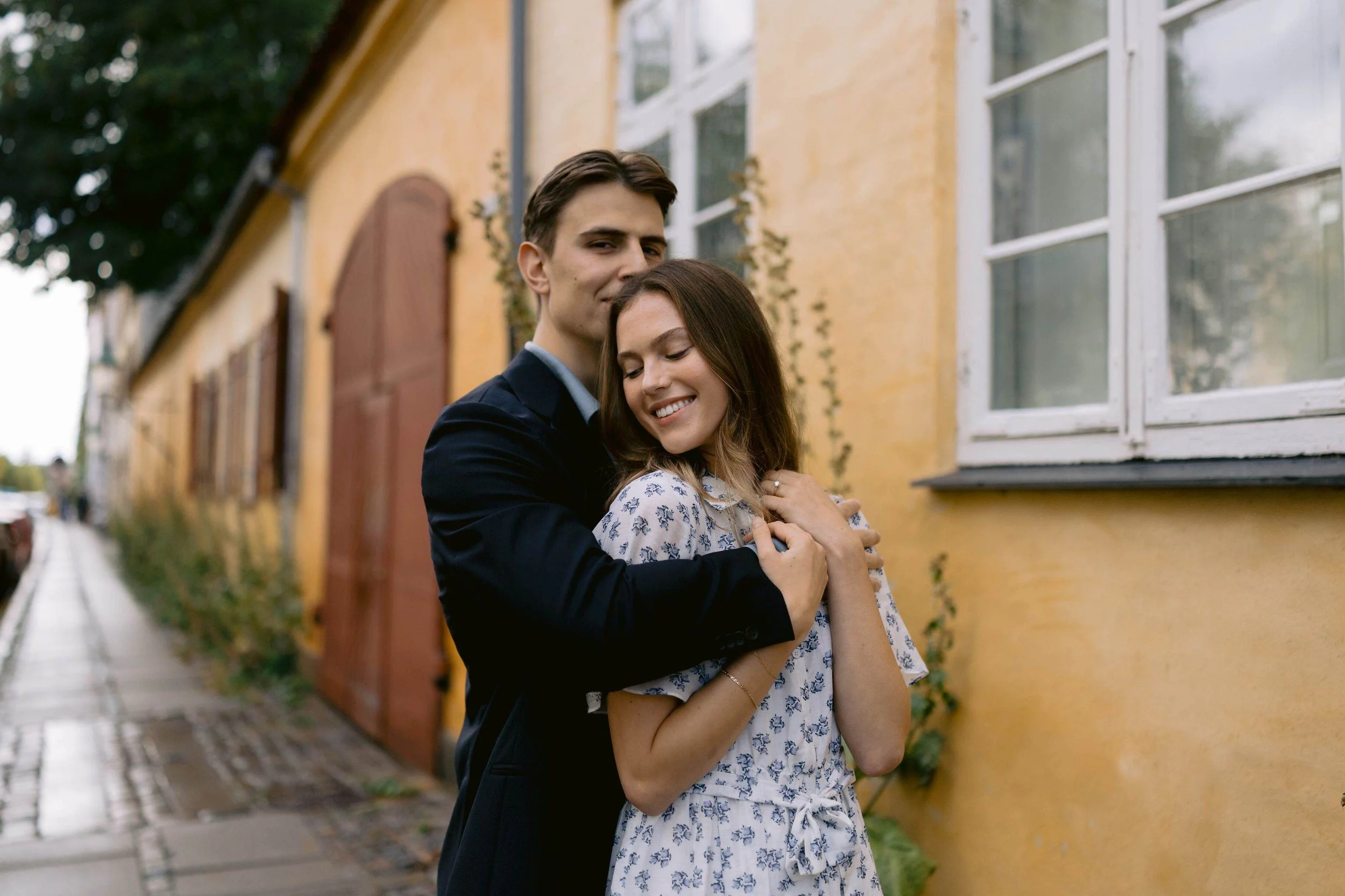
Christianshavn is one of my favourite areas for colourful streets, partly because I live close by and know the area well. It is also a neighbourhood where the colour of the buildings is only part of what makes it interesting. The canals, boats, bridges and streets around the water give you much more to work with.
VisitCopenhagen describes Christianshavn as one of Copenhagen’s most picturesque districts, with its coloured houses and canals, and that is probably the simplest way to explain why I keep coming back to it.
Wildersgade is one street worth looking at, and on the other side of the canal you can explore Dronningensgade and the surrounding streets. I would not approach Christianshavn as a place where you need to find one particular colourful building. It works better as an area to walk through, with plenty of different views as you move between the streets and the water.
Would like to see colourful streets “in action”? Explore the galleries from real couples
Frederiksholms Kanal
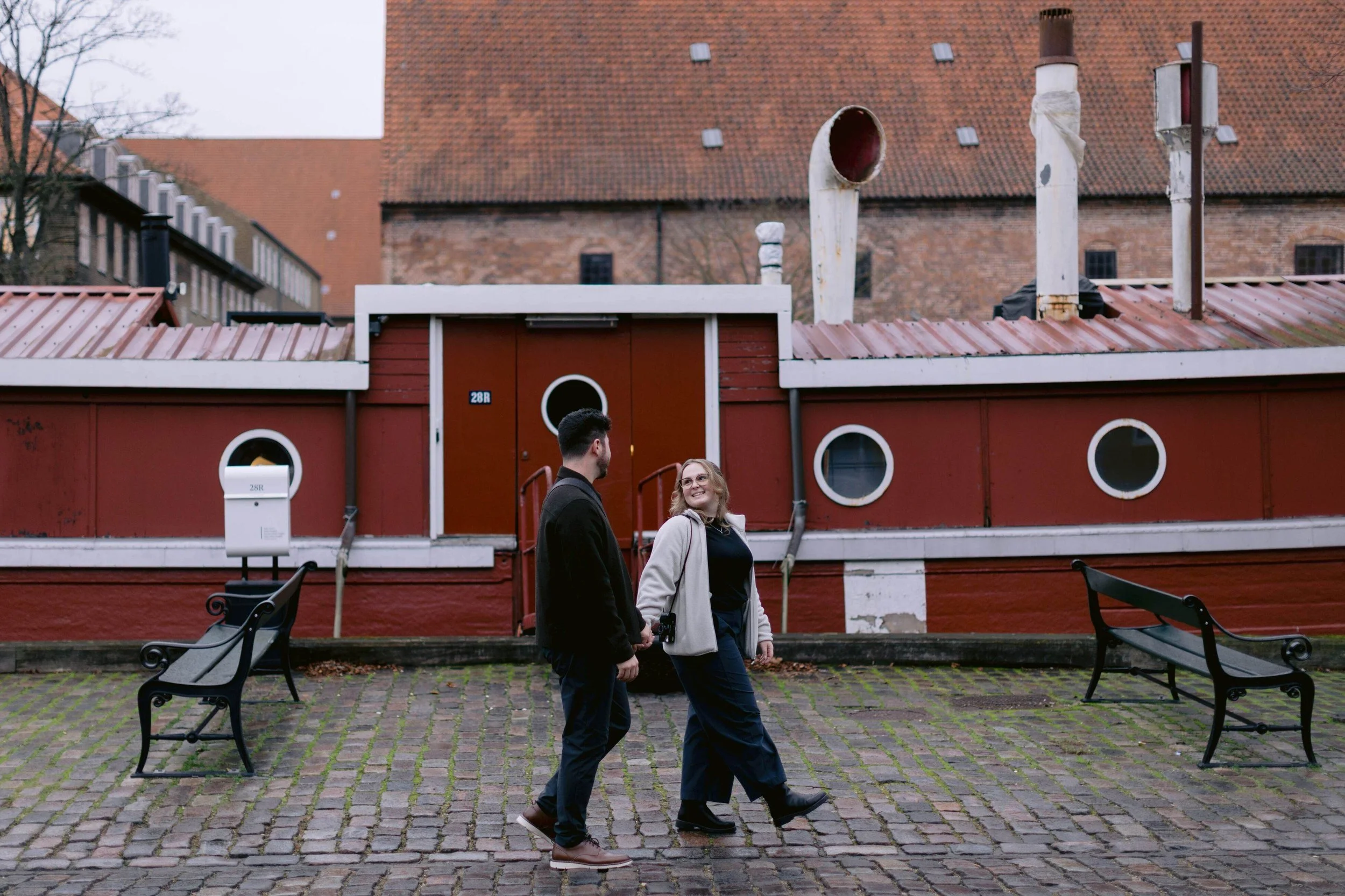
The area around Frederiksholms Kanal is another place I would include if you are exploring the centre of Copenhagen. The combination of historic buildings, colourful façades, boats and small bridges makes it interesting even when you are not specifically looking for colourful houses.
It is also easy to combine with other central sights, so you do not need to make a special trip just for it. Walk along the canal and look at the streets around it rather than concentrating on one particular viewpoint. The water gives you different angles and reflections, and the boats and bridges add something to the photos that you simply do not get from photographing a row of houses.
Olufsvej
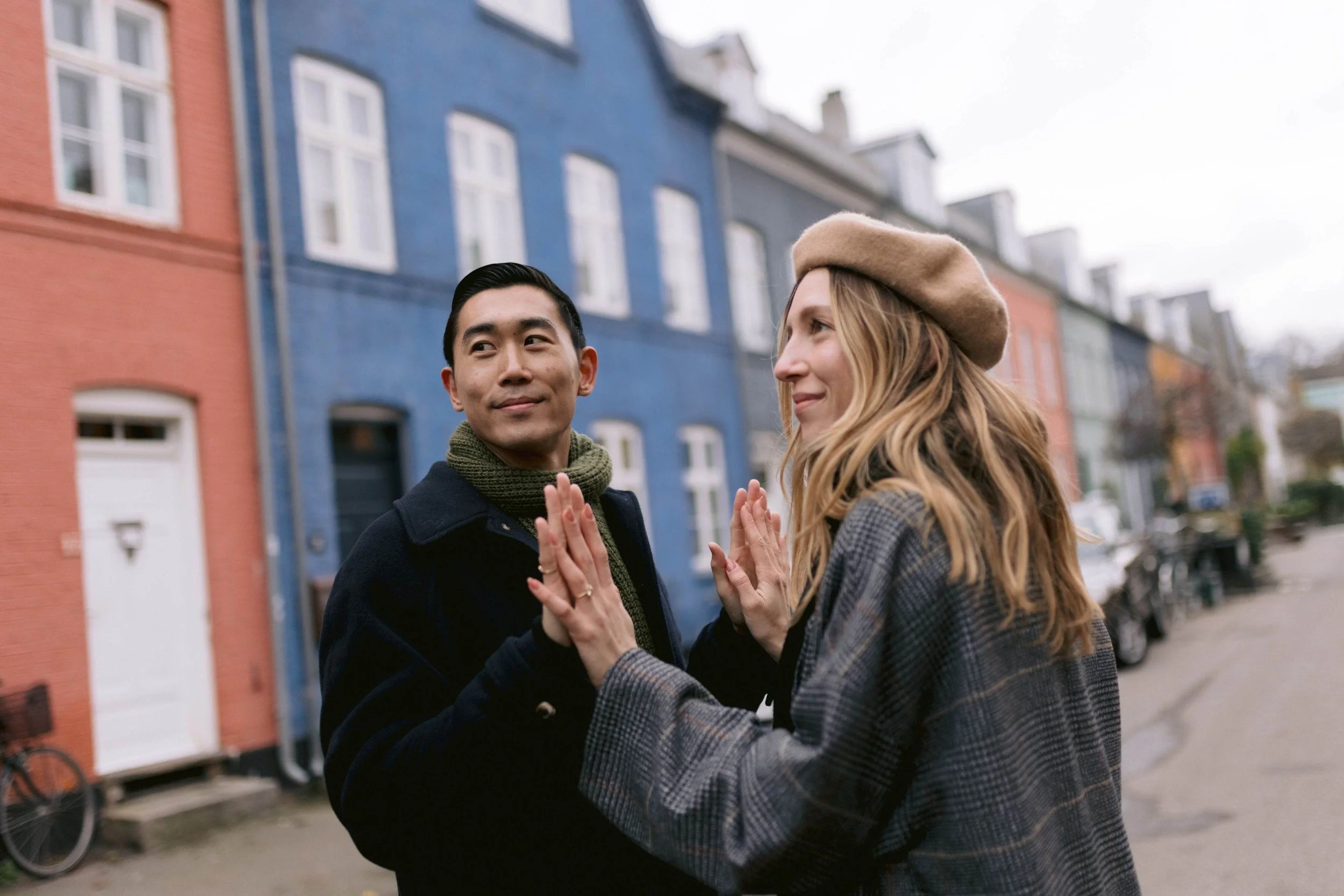
Olufsvej is a very different experience from somewhere like Magstræde or Nyhavn. It is more tucked away and feels much more like a residential street. The colourful houses are the main reason to visit, but I would not personally travel across Copenhagen just to see this one street.
If you are already exploring Østerbro, though, it is worth adding to your walk. It is also a good reminder that some of the more interesting colourful streets in Copenhagen are not necessarily the ones that appear on every first-time visitor’s itinerary.
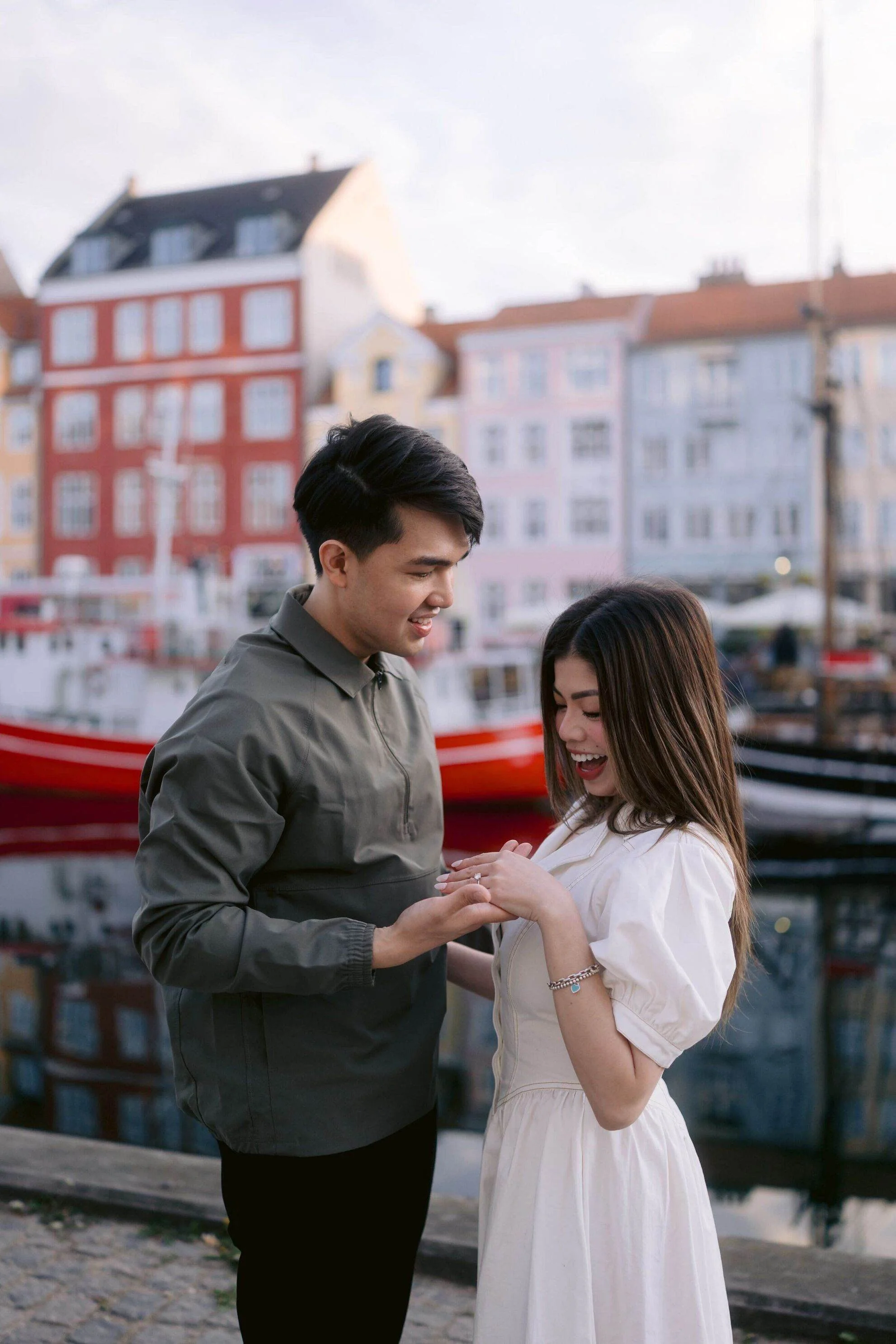
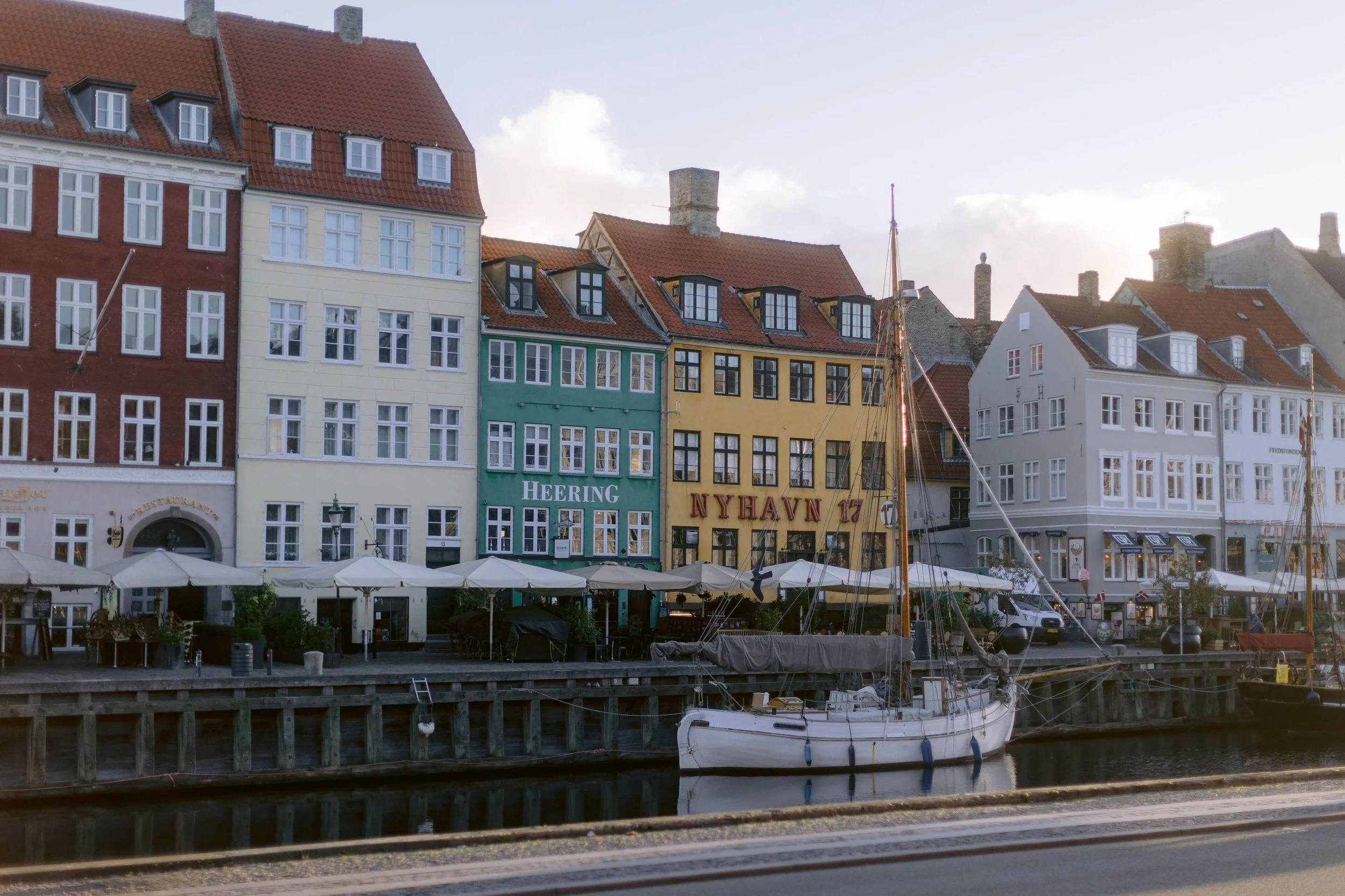
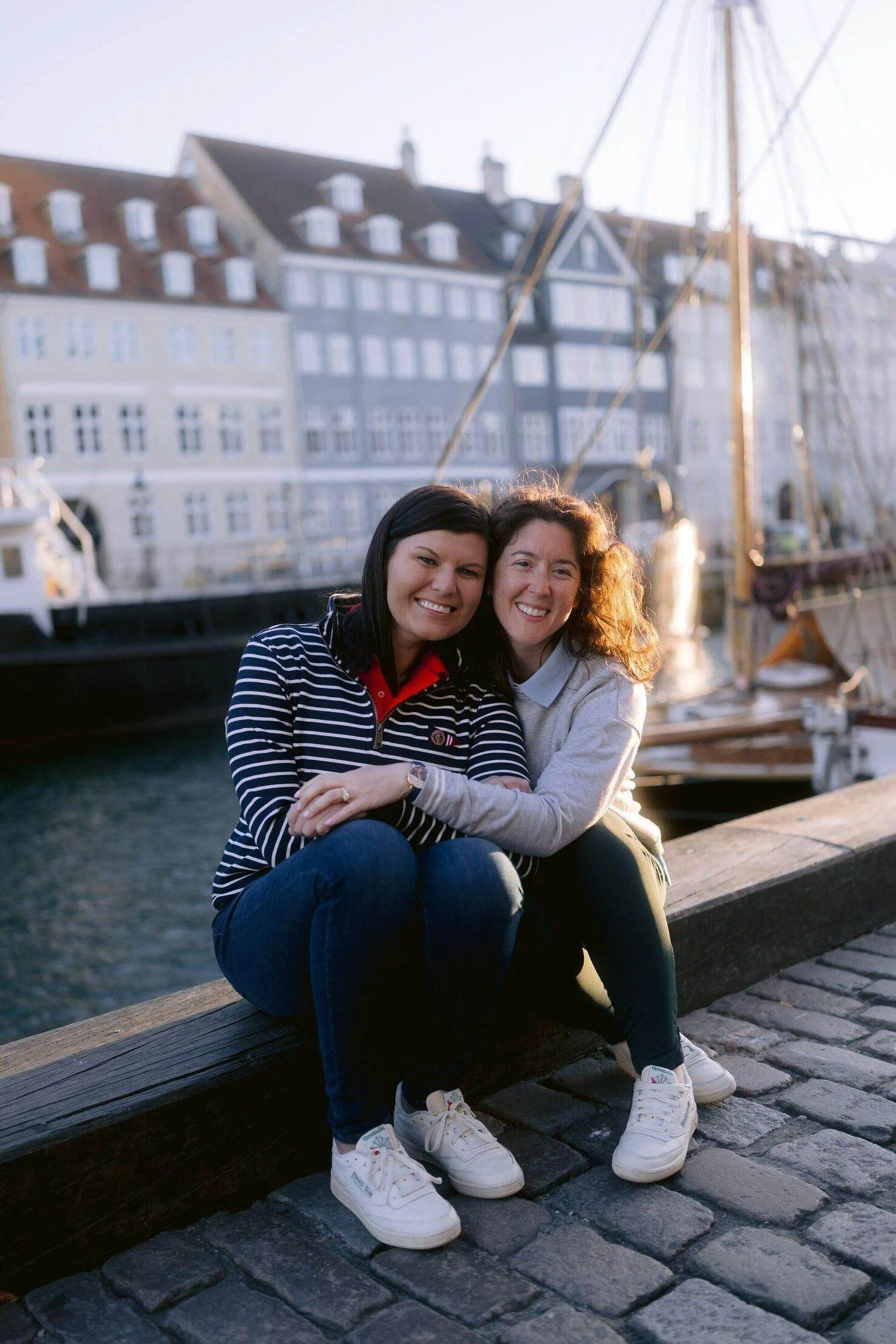
My take on Nyhavn
And then there is Nyhavn, probably the most famous colourful part of Copenhagen. The harbour is lined with brightly painted historic buildings, and the area has a long connection with Copenhagen’s maritime history. Today it is filled with cafés, restaurants and canal tours and is one of the city’s most recognisable sights.
There is a reason everyone wants to see it, and if you are visiting Copenhagen for the first time, I would still go. But from a photography point of view, Nyhavn can be a bit more difficult than the postcard images suggest. It is usually busy, and I often find catering and delivery trucks around the harbour, particularly earlier in the day. On weekend mornings, there can also be rubbish left behind from the previous day’s crowds.
So while Nyhavn is certainly worth seeing, it is not necessarily where I would spend most of my time if my main aim was to photograph colourful Copenhagen. The crowds are part of the experience, and sometimes they simply make it harder to get the photograph you had in mind.
Final Thoughts
These are some of the colourful streets and areas I would recommend exploring around Copenhagen. Some are well known, while others are quieter and easier to discover as you walk around the city.
If you have time, don’t stop at the obvious viewpoint. Walk a little further, turn down the next street, or have a look inside one of the hidden courtyards you come across. Copenhagen has plenty of colourful buildings beyond the places you see in every guide, and exploring a little can often lead you to some of the nicest views and photographs.

If you’d like to have your photos taken in some of Copenhagen’s colourful streets, I’d love to hear from you! Get in touch with me here or scan Whatsapp QR code above.

About the author:
I'm Ieva Vi - a wedding & elopement photographer, based in Copenhagen. When I'm not behind the lens capturing beautiful moments, I love to explore new places and share my experiences with readers. Take a look at my portfolio, and feel free to reach out for collaborations.
You may also be interested in the following articles: